Introduction
The USA remains one of the most attractive markets for Indian food exporters. Indian food producers are offering American consumers an ever-wider variety of food products, from spices and processed foods to ready-to-eat meals and fresh produce. But to get into the US market, you have to do more than make good food; you have to follow the FDA rules to the letter.
One of the most important regulations affecting food businesses today is FSMA 204, commonly known as the Food Traceability Rule. While many exporters are familiar with FDA Food Facility Registration, fewer understand how FSMA 204 can impact their export operations.
This guide explains FSMA 204 in simple terms, why it matters for Indian exporters, and how businesses can prepare for successful and compliant exports to the USA.
What Is FSMA 204?
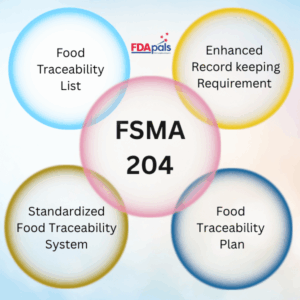 FSMA 204 is a part of the Food Safety Modernization Act (FSMA) introduced by the US Food and Drug Administration (FDA). The regulation focuses on improving food traceability throughout the supply chain.
Instead of reacting to food safety incidents after they occur, the FDA aims to identify and remove potentially unsafe products from the market more quickly through better recordkeeping and traceability.
For food exporters, this means maintaining accurate records that help track products from their source to the final customer.
Unlike FDA Food Facility Registration, which identifies a manufacturing facility, FSMA 204 focuses on documenting the movement of certain food products throughout the supply chain.
Why Should Indian Food Exporters Care About FSMA 204?
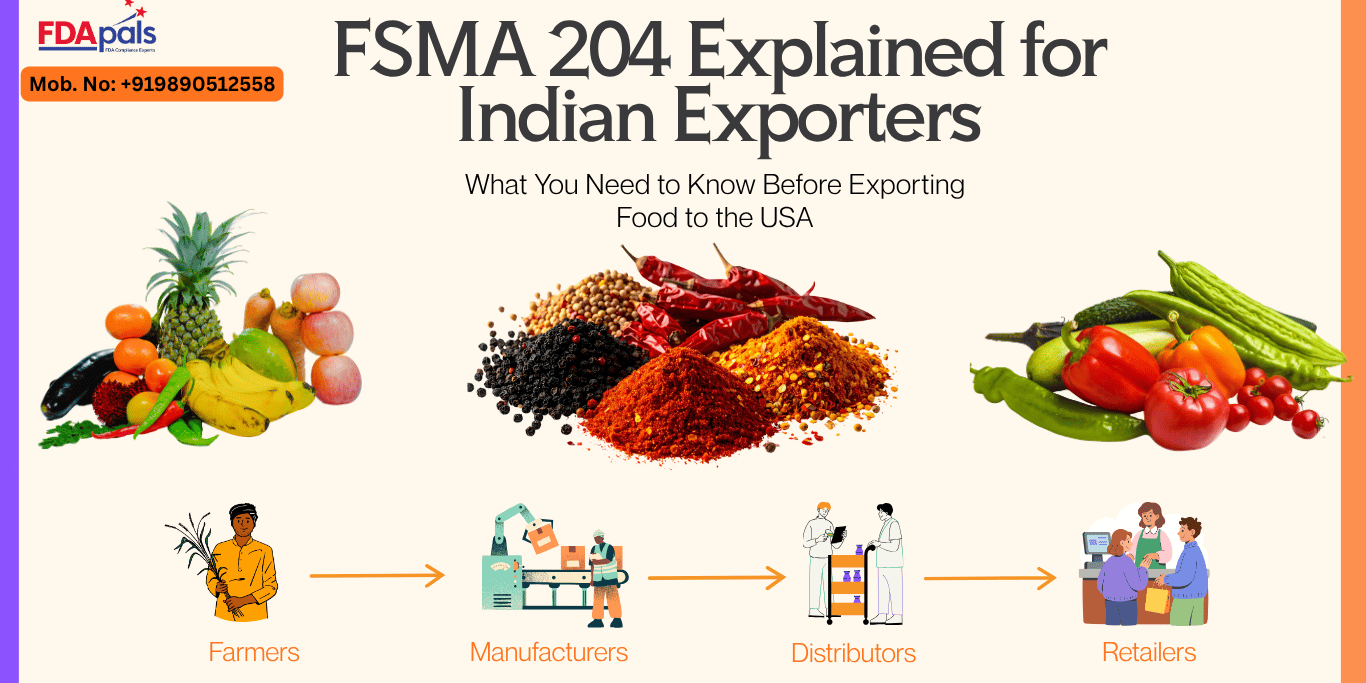
India exports a wide range of food products to the United States every year. As global supply chains become more complex, US regulators expect greater transparency regarding where food originates and how it moves between suppliers, manufacturers, distributors, and retailers.
Ignoring traceability requirements can increase the risk of shipment delays, compliance reviews, and additional documentation requests.
For Indian exporters, understanding FSMA 204 can provide several business advantages:
- Better preparation for FDA inspections
- Improved buyer confidence
- Reduced compliance risks
- Stronger relationships with US importers
- Enhanced supply chain management
Companies that invest in compliance often gain a competitive edge in international markets.
Understanding the Food Traceability Rule
Food traceability refers to the ability to track a food product through every stage of the supply chain.
If a food safety issue occurs, authorities can quickly determine:
- Where the product originated
- Which suppliers handled it
- Which facilities processed it
- Where it was distributed
- Which customers received it
Efficient traceability helps reduce the scope of recalls and minimizes disruptions to the food industry.
For exporters, maintaining organized records is no longer just a best practice—it is becoming an essential part of doing business with international buyers.
Which Food Products May Be Affected?
Certain food categories receive greater attention because they may present a higher food safety risk.
| Food Category | Examples |
|---|---|
| Fresh Fruits | Mangoes, Grapes |
| Fresh Vegetables | Okra, Onions |
| Leafy Greens | Spinach, Lettuce |
| Herbs | Basil, Coriander |
| Nut Butters | Peanut Butter |
| Seafood | Shrimp, Fish |
| Soft Cheeses | Imported Cheese Products |
| Ready-to-Eat Foods | Prepared Salads and Similar Products |
Businesses should carefully evaluate whether their exported products fall within applicable traceability requirements and maintain appropriate documentation.
Key Requirements Under FSMA 204
The regulation emphasizes maintaining records that allow products to be traced efficiently throughout the supply chain.
Important areas include:
Source Identification
Businesses should know where ingredients or raw materials originate.
Supply Chain Documentation
Every stage of product movement should be documented clearly.
Batch Identification
Proper batch or lot identification helps isolate products quickly if an issue arises.
Distribution Records
Businesses should maintain records showing where products were shipped and received.
Accessible Documentation
Information should be organized and available when requested during regulatory reviews.
The objective is to enable rapid identification and removal of affected products while minimizing unnecessary disruption.
How Does FSMA 204 Affect Indian Manufacturers?
Many Indian food businesses assume that obtaining FDA Food Facility Registration is enough to export successfully. In reality, buyers and regulators increasingly expect comprehensive traceability systems.
Examples include:
Spice Manufacturers
Spice exporters should maintain records linking raw material suppliers, processing batches, and shipments.
Ready-to-Eat Food Producers
Prepared food manufacturers need consistent documentation covering ingredients and production history.
Frozen Food Exporters
Frozen food businesses benefit from organized inventory and shipment tracking.
Organic Food Brands
Maintaining supply chain transparency helps support quality assurance and customer confidence.
Private Label Manufacturers
Manufacturers supplying international brands should be prepared to demonstrate traceability throughout production.
Strong documentation practices can improve operational efficiency while reducing compliance-related uncertainty.
Common Compliance Mistakes Indian Exporters Make
Many compliance challenges arise not from product quality but from inadequate documentation.
Common mistakes include:
- Incomplete supplier records
- Missing batch identification details
- Poor document organization
- Manual systems prone to errors
- Lack of employee training
- Failure to maintain shipment history
- Assuming FDA registration alone satisfies all requirements
Addressing these issues proactively can reduce delays and improve export readiness.
FDA Food Facility Registration vs FSMA 204
Many exporters confuse these two requirements.
| FDA Food Facility Registration | FSMA 204 |
|---|---|
| Registers the manufacturing facility | Focuses on food traceability |
| Identifies eligible facilities with the FDA | Requires ongoing record management |
| Administrative registration process | Operational compliance requirement |
| Helps establish regulatory identification | Supports rapid product tracking |
| Must be maintained as required | Requires continuous documentation practices |
Understanding the distinction helps businesses build a more complete compliance strategy.
What Can Happen Without Proper Compliance?
Poor traceability can create operational challenges for exporters.
Potential consequences include:
- Shipment delays
- Additional documentation requests
- Increased regulatory scrutiny
- Import detention risks
- Business interruptions
- Customer dissatisfaction
- Higher compliance costs
- Damage to brand reputation
Maintaining organized records helps businesses respond efficiently if questions arise regarding exported products.
Benefits of Early FSMA 204 Compliance
Rather than viewing compliance as an administrative burden, many successful exporters use it as a competitive advantage.
Benefits include:
Improved Buyer Confidence
International buyers prefer suppliers with reliable compliance systems.
Better Supply Chain Visibility
Businesses gain greater control over inventory and product movement.
Faster Response During Quality Issues
Well-maintained records support quicker investigations and corrective actions.
Reduced Recall Costs
Accurate traceability limits the scope of product recalls.
Easier Regulatory Reviews
Organized documentation simplifies compliance inspections and customer audits.
Stronger International Reputation
Reliable compliance practices demonstrate professionalism and commitment to food safety.
How Indian Exporters Can Prepare for FSMA 204
Preparation begins with reviewing existing business processes and identifying documentation gaps.
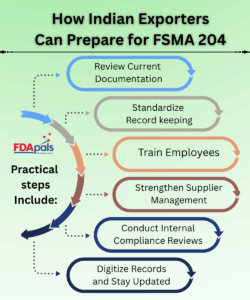
Practical steps include:
Review Current Documentation
Assess supplier records, production logs, and shipment information.
Standardize Recordkeeping
Use consistent formats across departments to improve accuracy.
Train Employees
Ensure staff understand documentation procedures and compliance responsibilities.
Strengthen Supplier Management
Work closely with suppliers to obtain complete and accurate information.
Conduct Internal Compliance Reviews
Regular audits help identify issues before they become significant problems.
Digitize Records
Electronic systems often improve accessibility and reduce administrative errors.
Stay Updated
Food regulations evolve over time, making continuous compliance monitoring essential.
💯How FDA Pals Can Help
Navigating FDA regulations can be challenging, especially for businesses entering the US market for the first time.
FDA Pals provides regulatory consulting services designed to simplify the compliance process for food exporters.
📢 Our services include:
👉FDA Food Facility Registration
👉Food labeling compliance support
👉Regulatory guidance for food manufacturers
👉Ongoing compliance assistance
👉Food Facility Registration Renewal
Whether you are a startup exporter or an established food manufacturer, professional guidance can help reduce regulatory risks and streamline your export journey.
🎯Conclusion
As the global food industry places greater emphasis on transparency and accountability, understanding FSMA 204 is becoming increasingly important for Indian food exporters.
While FDA Food Facility Registration remains a key regulatory requirement, maintaining strong traceability practices can further strengthen export readiness, improve buyer confidence, and support long-term business growth.
Businesses that invest in compliance today are better positioned to navigate future regulatory expectations and build lasting relationships in the US market.
If your company is planning to export food products to the United States or wants to strengthen its compliance framework, partnering with experienced regulatory professionals can simplify the process and help you move forward with confidence.
Frequently Asked Questions
Q. 1) What is FSMA 204?
FSMA 204 is a food traceability regulation that focuses on improving recordkeeping throughout the food supply chain to support faster identification and management of potential food safety issues.
Q. 2) Does FSMA 204 apply to Indian exporters?
Indian exporters supplying covered food products to the United States should understand applicable FDA traceability expectations and maintain appropriate documentation to support compliance.
Q. 3) Is FSMA 204 the same as FDA Food Facility Registration?
No. FDA Food Facility Registration identifies eligible manufacturing facilities, while FSMA 204 focuses on maintaining traceability records for certain food products.
Q. 4) Why is food traceability important?
Traceability enables businesses and regulators to identify product movement quickly, improving supply chain transparency and supporting efficient responses to food safety concerns.
Q. 5) Can poor documentation affect exports?
Incomplete or poorly organized records may increase the likelihood of shipment delays, additional compliance reviews, and operational challenges.
Q. 6) How can businesses prepare?
Businesses should establish organized recordkeeping systems, train employees, review supplier documentation, and conduct regular compliance assessments.