
Introduction
India has emerged as one of the fastest-growing cosmetic markets in the world, attracting beauty brands from the United States, Europe, South Korea, Japan, Australia, and many other countries. With increasing consumer demand for skincare, haircare, makeup, and personal care products, global cosmetic companies are actively exploring opportunities to launch their products in the Indian market.
However, entering India’s cosmetic industry involves more than developing innovative formulations and attractive packaging. Regulatory compliance plays a critical role in ensuring that cosmetic products can be legally imported, registered, and sold within the country. One of the most important compliance requirements involves verifying that cosmetic formulations do not contain ingredients that are prohibited or restricted under Indian regulations.
Many international brands assume that ingredients approved in their home countries will automatically be accepted in India. Unfortunately, this assumption can lead to costly registration delays, product rejections, import issues, and even market recalls.
Understanding banned and restricted cosmetic ingredients in India is therefore essential for every global cosmetic manufacturer, exporter, importer, and brand owner seeking successful market entry.
This guide explains the regulatory framework, the difference between banned and restricted ingredients, common compliance concerns, and how brands can avoid costly mistakes during cosmetic registration in India.
Understanding India’s Cosmetic Regulatory Framework
The Indian cosmetic industry is regulated under the Drugs and Cosmetics Act and the Cosmetics Rules, 2020. These regulations establish safety, quality, labeling, manufacturing, and import requirements for cosmetic products marketed in India.
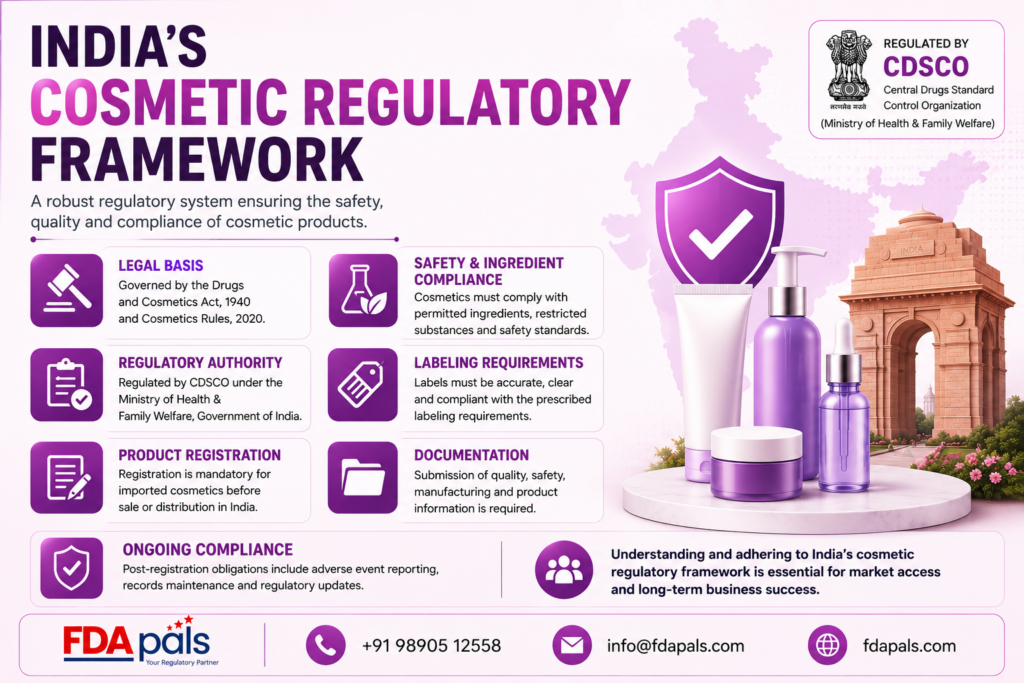 The Central Drugs Standard Control Organization (CDSCO) is responsible for overseeing cosmetic imports and registrations. Additionally, the Bureau of Indian Standards (BIS) develops standards and specifications that help ensure cosmetic safety and quality.
Before a cosmetic product can be imported and sold in India, the formulation must comply with applicable ingredient restrictions and safety requirements. During the registration process, regulatory authorities may review ingredient information and supporting documentation to ensure compliance.
For global brands, ingredient assessment should be one of the first steps before initiating cosmetic registration.
Why Ingredient Compliance Matters for Global Brands
Ingredient compliance is not merely a regulatory formality. It directly affects a brand’s ability to enter and operate within the Indian market.
Non-compliant ingredients can result in:
- Delays in cosmetic registration approval
- Requests for additional documentation
- Import clearance issues
- Product detention at ports
- Market withdrawal requirements
- Increased compliance costs
- Damage to brand reputation
Many international brands invest heavily in marketing, distribution partnerships, and product launches. Discovering ingredient-related compliance issues after submission can disrupt launch timelines and create significant financial losses.
Conducting a thorough formulation review before registration helps brands reduce regulatory risks and accelerate market entry.
Banned vs. Restricted Cosmetic Ingredients: Understanding the Difference
One of the most common areas of confusion involves the distinction between banned ingredients and restricted ingredients.
Banned Ingredients
Banned ingredients are substances that cannot be intentionally included in cosmetic formulations marketed in India. Their use is prohibited due to safety concerns, toxicity risks, or unacceptable health effects.
Products containing prohibited ingredients may be denied registration or removed from the market.
Restricted Ingredients
Restricted ingredients are substances that may be used only under specific conditions. Regulations may define:
- Maximum concentration limits
- Product category restrictions
- Usage limitations
- Warning label requirements
- Specific application conditions
A restricted ingredient does not necessarily make a product non-compliant. However, exceeding permitted limits or failing to meet applicable conditions can result in regulatory violations.
Commonly Prohibited Cosmetic Ingredients in India
Although cosmetic regulations continue to evolve, several ingredients have historically been prohibited or heavily restricted due to safety concerns.
Mercury and Mercury Compounds
Mercury has long been associated with skin-lightening products and certain cosmetic formulations. Excessive exposure may pose serious health risks, including neurological and kidney-related concerns.
India imposes strict controls on mercury use in cosmetics. Products containing unauthorized mercury levels may face regulatory action and import restrictions.
Lead and Other Heavy Metals
Heavy metals such as lead, arsenic, and cadmium can create significant safety concerns when present above acceptable limits.
Authorities closely monitor heavy metal contamination because prolonged exposure may have adverse health consequences. Manufacturers should ensure robust quality control and testing procedures to minimize contamination risks.
Chloroform
Chloroform has historically been used in certain cosmetic and personal care formulations. Due to concerns regarding safety and toxicity, its use in cosmetics is highly restricted or prohibited in many jurisdictions, including India.
Vinyl Chloride
Vinyl chloride is associated with significant health concerns and is generally prohibited for cosmetic applications. Products containing this substance may fail regulatory review.
Bithionol
Bithionol has been linked to photosensitivity reactions and other safety concerns. As a result, its cosmetic use is restricted in many markets.
Certain Skin-Lightening Agents
India has increased scrutiny of skin-lightening products due to concerns regarding ingredient safety. Some ingredients used in whitening products may face restrictions or prohibitions depending on concentration and intended use.
Manufacturers of brightening and whitening products should carefully evaluate ingredient compliance before registration.
Restricted Ingredients Frequently Used in Cosmetic Formulations
Many commonly used cosmetic ingredients remain permitted in India but are subject to specific concentration limits and usage requirements.
Formaldehyde
Formaldehyde and formaldehyde-releasing preservatives may be allowed only under specified conditions.
Manufacturers must carefully assess:
- Product type
- Concentration levels
- Labeling requirements
- Intended use
Failure to meet these requirements may create compliance issues.
Salicylic Acid
Salicylic acid is widely used in acne treatments, exfoliating products, and skincare formulations.
While generally permitted within specified limits, manufacturers must ensure that concentrations remain within acceptable regulatory thresholds.
Hydrogen Peroxide
Hydrogen peroxide is frequently used in hair products and oral care products.
Its use is often subject to concentration restrictions and product-specific requirements.
Triclosan
Triclosan has faced increased regulatory scrutiny globally due to environmental and safety concerns.
Manufacturers using triclosan should carefully review current regulatory requirements before entering the Indian market.
Parabens
Parabens remain common preservatives in cosmetic products. However, certain parabens may be subject to restrictions regarding concentration levels and permitted applications.
Brands should verify compliance before registration submissions.
Resorcinol
Resorcinol is commonly found in hair coloring products and may be permitted only under defined usage conditions.
Appropriate concentration limits and labeling requirements must be followed.
UV Filters
Sunscreen products frequently contain UV-filtering ingredients.
Only approved UV filters may be used, and specific concentration restrictions may apply depending on the ingredient and product category.
Cosmetic Ingredients That Frequently Create Compliance Problems for Imported Products
Regulatory reviews often identify compliance concerns involving:
Skin-Lightening Products
Products marketed for whitening, brightening, or pigmentation management often receive increased scrutiny.
Manufacturers should carefully evaluate active ingredients and marketing claims before submission.
Anti-Aging Products
Anti-aging formulations sometimes contain ingredients that may be classified differently across jurisdictions.
Products approved elsewhere may still require ingredient review for Indian compliance.
Herbal and Natural Cosmetics
Many brands assume natural ingredients automatically qualify as compliant.
However, natural origin does not guarantee regulatory acceptance. Certain botanical extracts may require safety assessment and supporting documentation.
Korean Beauty Products
K-beauty products frequently incorporate innovative ingredients and advanced formulations.
Although popular among Indian consumers, these products may require additional ingredient evaluation during registration.
How CDSCO Reviews Cosmetic Ingredients
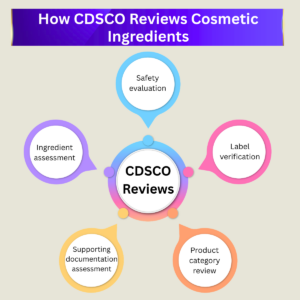 During the cosmetic registration process, authorities may examine formulation details to verify regulatory compliance.
Review activities may include:
- Ingredient assessment
- Safety evaluation
- Label verification
- Product category review
- Supporting documentation assessment
Authorities may request clarification or additional information if concerns arise regarding specific ingredients.
For this reason, accurate documentation and ingredient transparency are critical.
Consequences of Using Non-Compliant Ingredients
The consequences of ingredient non-compliance can extend beyond registration delays.
Potential outcomes include:
Registration Rejection
Applications may be delayed or denied if prohibited ingredients are identified.
Import Detention
Products may encounter customs-related issues if compliance concerns arise during import review.
Product Recalls
Products already available in the market may require withdrawal if safety concerns emerge.
Financial Losses
Inventory destruction, re-labeling, reformulation, and resubmission costs can significantly impact profitability.
Reputation Damage
Regulatory issues can negatively affect consumer trust, distributor confidence, and long-term brand value.
Best Practices for Ingredient Compliance Before Cosmetic Registration
Global brands can significantly reduce compliance risks by implementing proactive regulatory strategies.
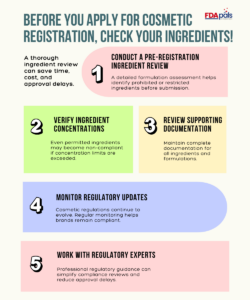 Conduct a Pre-Registration Ingredient Review
A detailed formulation assessment helps identify prohibited or restricted ingredients before submission.
Verify Ingredient Concentrations
Even permitted ingredients may become non-compliant if concentration limits are exceeded.
Review Supporting Documentation
Maintain complete documentation for all ingredients and formulations.
Monitor Regulatory Updates
Cosmetic regulations continue to evolve. Regular monitoring helps brands remain compliant.
Work with Regulatory Experts
Professional regulatory guidance can simplify compliance reviews and reduce approval delays.
How FDA Pals Helps Global Cosmetic Brands Enter India
Navigating India’s cosmetic regulatory landscape can be challenging, especially for international manufacturers unfamiliar with local requirements.
FDA Pals assists cosmetic brands with:
- Cosmetic ingredient compliance reviews
- Cosmetic registration support
- CDSCO documentation preparation
- Regulatory gap assessments
- Import compliance guidance
- Label compliance reviews
- Market-entry regulatory strategies
By identifying potential compliance issues before submission, brands can minimize delays and improve registration success rates.
Conclusion
India offers tremendous growth opportunities for global cosmetic brands, but successful market entry requires careful regulatory planning. One of the most important steps in the process is ensuring that cosmetic formulations comply with Indian ingredient requirements.
Understanding the difference between banned and restricted cosmetic ingredients helps manufacturers avoid costly mistakes, registration delays, and market disruptions. Whether launching skincare, haircare, makeup, personal care, or beauty products, ingredient compliance should be evaluated long before import and registration activities begin.
A proactive compliance review not only reduces regulatory risk but also helps brands accelerate approvals, protect their reputation, and establish a successful presence in India’s rapidly expanding cosmetic market.
Before submitting your next cosmetic product for registration, make sure your formulation has been thoroughly reviewed for compliance with Indian regulations. The investment in early compliance assessment can save significant time, resources, and regulatory complications in the future.
FAQ: Banned and Restricted Cosmetic Ingredients in India
- What are banned cosmetic ingredients in India?
Banned cosmetic ingredients in India are substances that are prohibited from being used in cosmetic products due to safety concerns, toxicity risks, or potential harm to consumers. These ingredients cannot be intentionally included in formulations that are imported, manufactured, or sold in the Indian market. Examples may include certain heavy metals, mercury compounds, and other substances restricted under Indian cosmetic regulations. If a cosmetic product contains a prohibited ingredient, it may face registration rejection, import detention, product recall, or regulatory action. Before applying for cosmetic registration, brands should conduct a detailed ingredient review to ensure full compliance with CDSCO cosmetic regulations and avoid costly delays.
- What is the difference between banned and restricted cosmetic ingredients?
The key difference is that banned ingredients are completely prohibited, while restricted ingredients can be used under specific conditions. Restricted ingredients may have limits on concentration, product type, usage method, or labeling requirements. For example, an ingredient may be allowed in a hair product but prohibited in products intended for use around the eyes. Similarly, certain preservatives or UV filters may only be permitted up to a defined concentration. Global cosmetic brands must carefully review ingredient restrictions before entering the Indian market to ensure their formulations comply with current cosmetic ingredient compliance requirements.
- Are ingredients approved in the US or EU automatically allowed in India?
No. Approval in the United States, European Union, Japan, or South Korea does not automatically guarantee compliance in India. Each country follows its own cosmetic regulatory framework and ingredient restrictions. A formulation that is legally sold in one market may require modifications before being registered in India. This is one of the most common challenges faced by international cosmetic manufacturers. Conducting an India-specific ingredient assessment before cosmetic registration can help identify compliance gaps and reduce the risk of regulatory delays or registration rejection.
- Does CDSCO review cosmetic ingredients during registration?
Yes. During the cosmetic registration process, CDSCO may review formulation details and supporting documents to assess compliance with applicable regulations. Authorities may evaluate ingredient safety, concentration limits, product category suitability, and supporting technical information. If concerns arise regarding a particular ingredient, additional clarification or documentation may be requested. This is why accurate ingredient disclosure and proper regulatory documentation are essential for a smooth cosmetic registration process. A pre-registration compliance review can significantly improve approval timelines and reduce regulatory risks.
- Can imported cosmetics be rejected because of non-compliant ingredients?
Yes. Imported cosmetics can be delayed, rejected, or detained if authorities identify ingredients that do not comply with Indian cosmetic regulations. In some cases, products may require reformulation or additional documentation before they can enter the market. Ingredient-related issues are among the most common reasons for registration delays and import complications. Brands planning to export cosmetics to India should verify ingredient compliance before submission to avoid disruptions, unexpected costs, and delays in product launch schedules.
- How can foreign cosmetic brands verify ingredient compliance before entering India?
Foreign cosmetic brands should conduct a comprehensive ingredient review before beginning the cosmetic registration process. This review typically includes checking ingredient restrictions, concentration limits, product-specific requirements, labeling obligations, and supporting documentation. Regulatory consultants and compliance specialists can help identify potential concerns before submission. By performing an ingredient assessment early, brands can reduce the risk of registration delays, import issues, and costly reformulations. A proactive compliance strategy is often the fastest and most cost-effective approach for entering the Indian cosmetic market.
- What happens if a cosmetic product contains a prohibited ingredient?
If a cosmetic product contains a prohibited ingredient, authorities may reject the registration application, stop the import process, or require the product to be withdrawn from the market. Depending on the situation, the company may need to reformulate the product, update documentation, and resubmit the application. Beyond regulatory consequences, ingredient non-compliance can also damage brand reputation and delay market expansion plans. For this reason, ingredient compliance should always be verified before launching cosmetic products in India.
- Why is ingredient compliance important for cosmetic registration in India?
Ingredient compliance is one of the most critical aspects of cosmetic registration because it directly affects product approval, import eligibility, and consumer safety. Non-compliant ingredients can lead to registration delays, additional regulatory scrutiny, financial losses, and market-entry obstacles. As India’s cosmetic market continues to grow, regulatory authorities are placing increasing emphasis on product safety and compliance. Brands that invest in proper ingredient assessment and regulatory review are better positioned to achieve faster approvals and long-term success in the Indian market.